
Why Continuous Controls Monitoring Fails Without Continuous Data Context


Free the CISO, a podcast series that attempts to free CISOs from their shackles so they can focus on securing their organization, is produced by CIO.com in partnership with DataBee®, from Comcast Technology Solutions.
In each episode, Robin Das, Executive Director at Comcast under the DataBee team, explores the CISO’s role through the position’s relationship with other security stakeholders, from regulators and the Board of Directors to internal personnel and outside vendors.
Security and compliance leaders face unprecedented pressure. Attack surfaces continue to expand, regulations tighten, and boards increasingly expect real-time, defensible, audit-ready insights. Yet many enterprises still rely on fragmented data, manual investigation, and dashboards that show activity without explaining why it’s happening.
Organizations often say they have continuous controls monitoring (CCM).
But in practice, many still operate as though they’re in a periodic audit cycle.
This disconnect is why CCM so often underdelivers — and why true continuous monitoring only works when data is continuously correlated, validated, and contextualized.
Why Snapshots Don’t Work
A decade ago, continuous audit-ready visibility seemed unrealistic. Compliance teams were built around periodic assessments, manually gathering evidence and reviewing controls at fixed intervals. Today, expectations have changed dramatically. Boards and executives want assurance as environments change, not months later.
Most enterprises, however, are stuck in transition. They intellectually accept that continuous monitoring is the new standard, but their tools, processes, and team structures remain grounded in point-in-time workflows. This mismatch creates immense operational pressure: leaders must respond to inquiries in hours instead of weeks and prove not only that controls exist, but that they remain effective in dynamic, hybrid environments.
The Promise — and Risk — of Continuous Compliance
Continuous monitoring raised the bar for visibility and governance. But for many enterprises, it raised expectations without delivering the foundation needed to meet them.
When CCM is implemented without data context, normalization, and correlation, it can become deceptive. Metrics look “green,” dashboards refresh every hour, and alerts fire continuously — yet meaningful issues often remain buried. Continuous monitoring without intelligence becomes continuous noise.
The Role of Context and Correlation
Trusted, correlated data is the backbone of effective audit readiness and continuous controls monitoring and DataBee addresses this by integrating security and compliance telemetry across cloud, on-prem, SaaS, security tools, and GRC systems — and normalizing it into an OCSF-aligned structure that eliminates inconsistent formats, duplicate records, and unvalidated data.
But correlation is only the beginning. For controls to be monitored effectively, they must be mapped, aligned, and validated across multiple frameworks, not managed in isolation.
Layering in Compliance Frameworks Directly
Controls rarely match one-to-one across frameworks like NIST, ISO, PCI, CIS, or ODM. This fragmentation forces teams into duplicative testing, inconsistent reporting, and siloed oversight. DataBee helps solve this through its control mapping engine, which aligns controls across frameworks so teams can monitor once and report everywhere
This unified approach helps enable organizations to:
- Eliminate redundant validation by mapping equivalent controls across standards.
- Improve visibility through unified dashboards showing control health and exceptions across all frameworks.
- Strengthen defensibility using automated reporting and traceable evidence trails.
- Scale oversight with a consistent, mapped, and continuously validated compliance structure.
Mapped, unified controls ensure compliance isn’t a fragmented set of checklists — it becomes a coherent, connected, continuously validated system.
Bridging Aspiration and Reality: The Importance of the Security Data Fabric
Most organizations aspire to real-time compliance and continuous controls monitoring. Where they struggle is not intent — it's infrastructure. The missing link is a security data fabric: the connective tissue that unifies telemetry, enriches it with context, and helps make continuous compliance operationally achievable.
A security data fabric helps solve the core challenges that prevent CCM from working:
tool sprawl, fragmented telemetry, inconsistent formats, and disconnected visibility.
DataBee’s security data fabric weaves together data and context to help teams overcome these barriers and generate insights that are immediately trusted and usable.
Summary
Continuous controls monitoring fails when it’s built on fragmented data, periodic processes, and disconnected frameworks. Leaders are expected to provide real-time, defensible insights, yet most organizations still rely on workflows designed for static audits.
The solution isn’t more tools, dashboards, or alerts.
The solution is continuous data context — made possible by a unified security data fabric.
DataBee helps deliver continuous data context by:
- Unifying security and compliance telemetry
- Normalizing data through an extended OCSF model
- Mapping controls across frameworks
- Providing continuous, enriched context
- Supporting year-round audit readiness
With the right foundation in place, continuous controls monitoring becomes what it was always meant to be: reliable, real-time, and truly continuous.
Additional Resources:
DataBee® | Webinar: Agentic AI for Security and Compliance
DataBee® | DataBee® RiskFlow™ | Product Brief
DataBee® | DataBee® RiskFlow. Explainable AI for cyber risk insights.
DataBee®: Executive Reporting & Defensible Metrics
DataBee | Continuous Assurance Webinar | Security Data Fabric & Compliance
More posts

Learn why DataBee was named Data Integration Innovation of the Year and how a security data fabric enables continuous, explainable, evidence‑ready compliance.
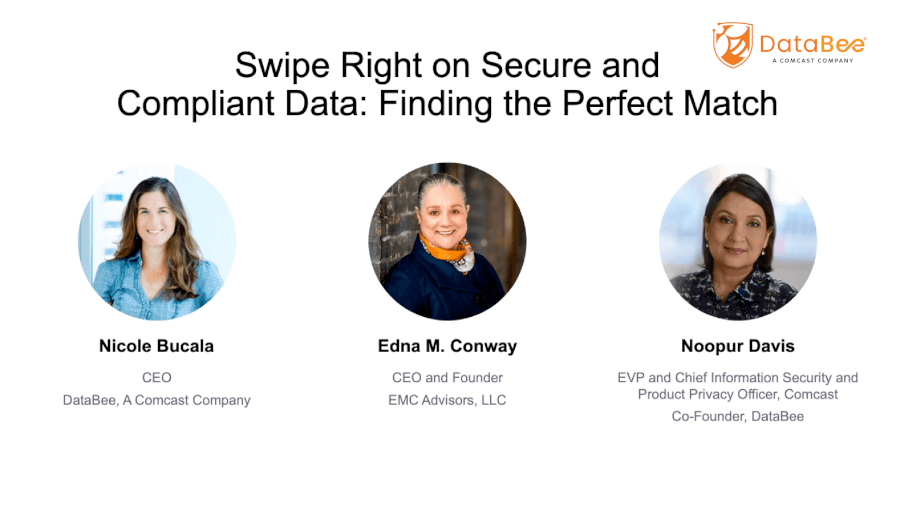
Overwhelmed by security data? Learn how to manage it effectively, reduce risk, and boost compliance in this expert-led webinar from DataBee and Comcast.
.jpg)
Discover how DataBee® BluVector uses AI threat detection and machine learning cybersecurity to help protect against zero-day attacks and advanced threats in real time.
Discover what DataBee can do for you

DataBee
Security, Risk and Compliance Data Fabric Platform
Developed and proven at scale, DataBee delivers connected security and compliance data and insights that can work for everyone in your organization.
Learn more
DataBee BluVector
Network Detection and Response
Built to protect critical government and enterprise networks, BluVector delivers AI-powered NDR for visibility across network, devices, users, files and data to discover and hunt skilled and motivated threat actors.
Learn more