
DataBee® for Security Threats
Threat data that's stitched together.
DataBee for Security Threats gives SOC and detection teams a unified, normalized view of threatactivity across your environment, so analysts spend less time fighting the noise and more timeacting on real alerts.
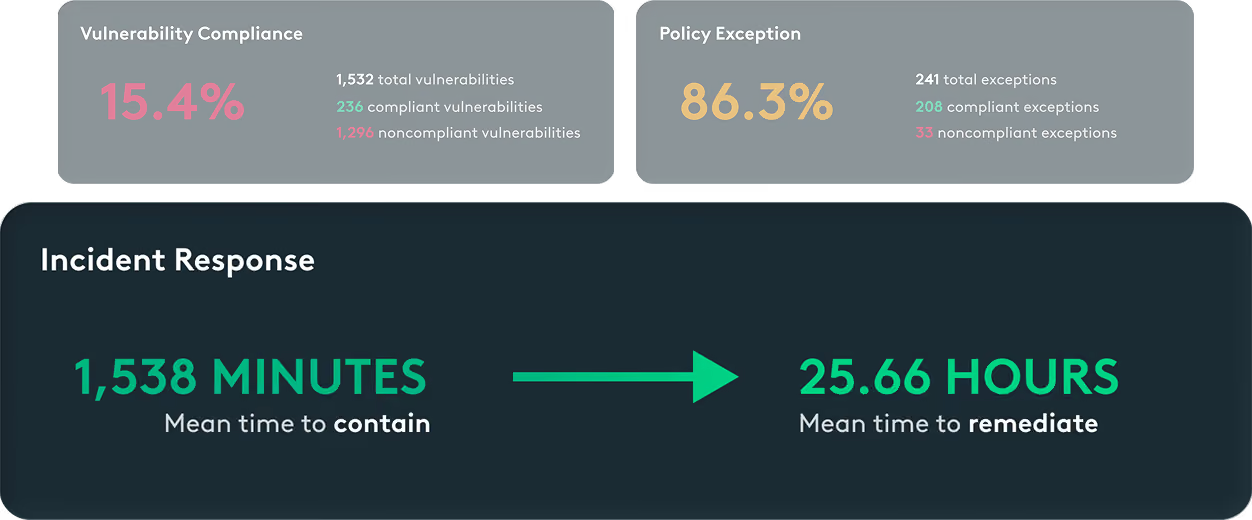
From alert noise to a coherent threat timeline.
Security operations teams are swimming in alerts — not because detection tools aren't working, but because those tools have never spoken the same language. Signals arrive in incompatible formats, duplicated across platforms, stripped of the asset and ownership context that makes them actionable. The result is analysts spending more time data-wrangling than investigating the real alerts.
DataBee for Security Threats changes that. Built on the DataBee platform's connected data foundation, it aggregates and normalizes security alerts and events across your existing SIEM, EDR, and network detection tools into a single, coherent threat timeline and node graph. Sigma-based detection rules travel with your normalized data, so detection logic isn't tied to any one platform. Real-time stream processing means you're working with current threat data, not yesterday's exports. The result is a unified hunting console grounded in trusted, traceable data — so your team can move from signal to investigation to action without switching tools or rebuilding context from scratch.
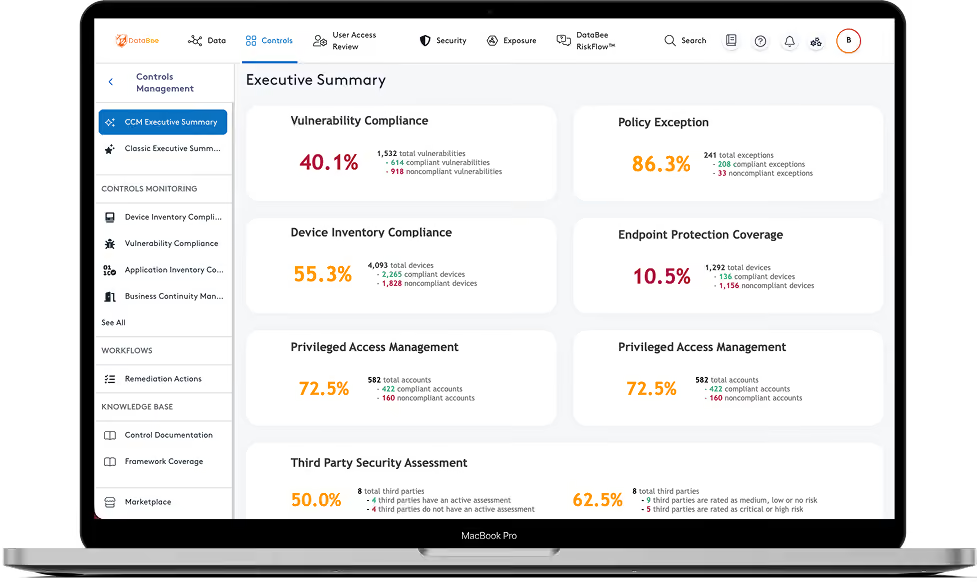
Drive better business outcome against data that holds up.
See how the DataBee connects to your existing tools and see your environment within days, using real data from your scanners and asset sources.
Contionus threat visibility built on your unified data.
Everything required to turn the alert noise into reliable, action-ready rules.
Needs copy here...
Needs copy here...
Needs copy here...
Needs copy here...
Needs copy here...
Needs copy here...
Needs copy here...
Needs copy here...
Needs copy here...
Needs copy here...
Needs copy here...
Needs copy here...
Built for every team responsible for threat detection and response.
DataBee for Security Threats is designed for SOC and detection team who need a clear unified picture, and for security leaders to understand waht that picture means for their risk.

CISO & Security Leaders
What you gain:
Correlated threat data connected to asset and control context
Defensible view of detection coverage and gaps
Trend reporting that shows movement over time, not snapshots

SOC and Detection Teams
What you gain:
Normalized, deduplicated alerts from all SIEM and detection sources
Sigma-based detection rules that travel with your data
Faster triage through enriched, cross-source threat context

Security and OperationsTeams
What you gain:
Clear ownership mapping for everyfinding
Tickets routed directly into Jira or ServiceNow
Reduced escalations through earlier, more accurate prioritization

How it works
Security programs are generating more vulnerability data than ever — but volume hasn't translated into actionability. Teams are reconciling findings across multiple scanners, working from asset inventories that age the moment they're exported, and producing reports they can't fully stand behind.
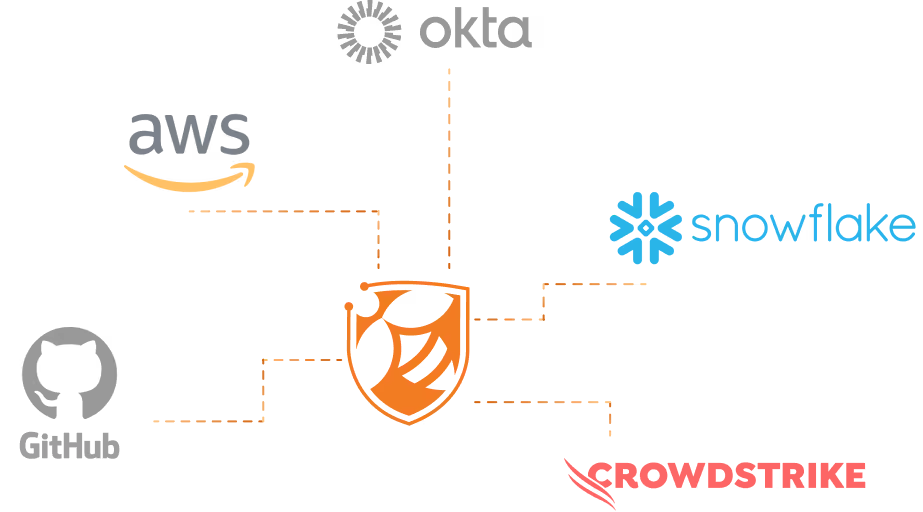
Ingest from anywhere
Connect to your existing scanner infrastructure, asset data sources, and cloud environments without replacing your tools or rewriting your stack. Tenable, Qualys, Rapid7, Microsoft Defender, CMDBs, EDR platforms — DataBee meets you where you are.
Normalize to OCSF
Raw vulnerability and asset data is transformed into a consistent, OCSF-native model, enabling accurate deduplication, correlation, and reporting across every source.
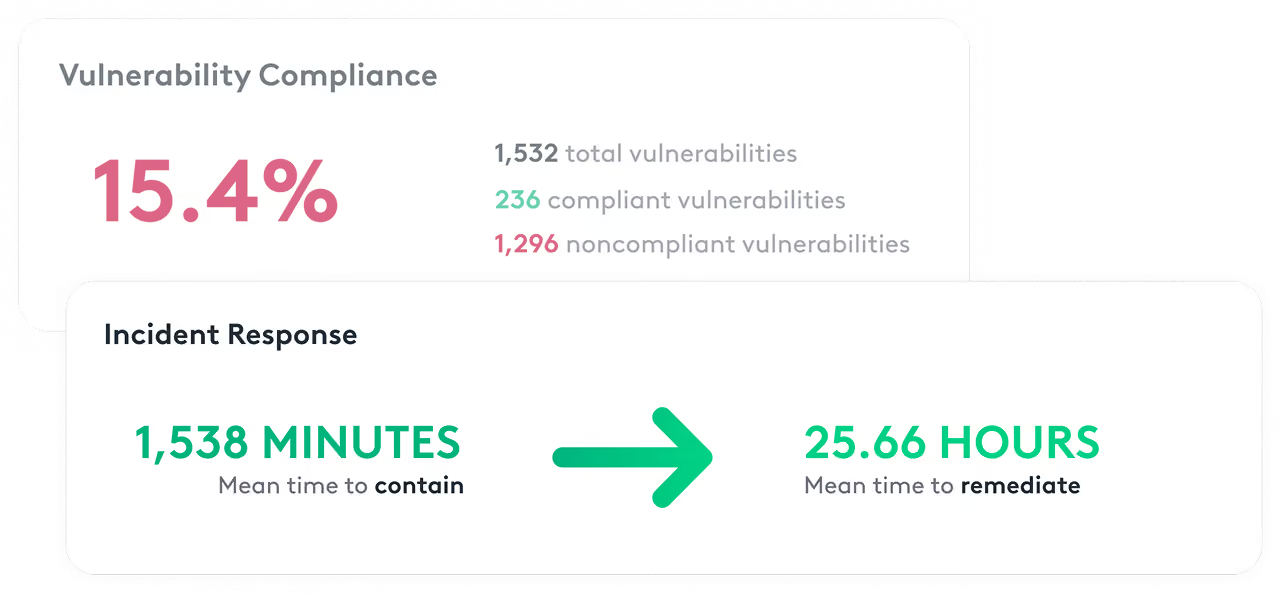
Enrich and correlate
Asset ownership, environment classification, and business context are linked to every finding — turning isolated scanner output into connected, meaningful exposure data.
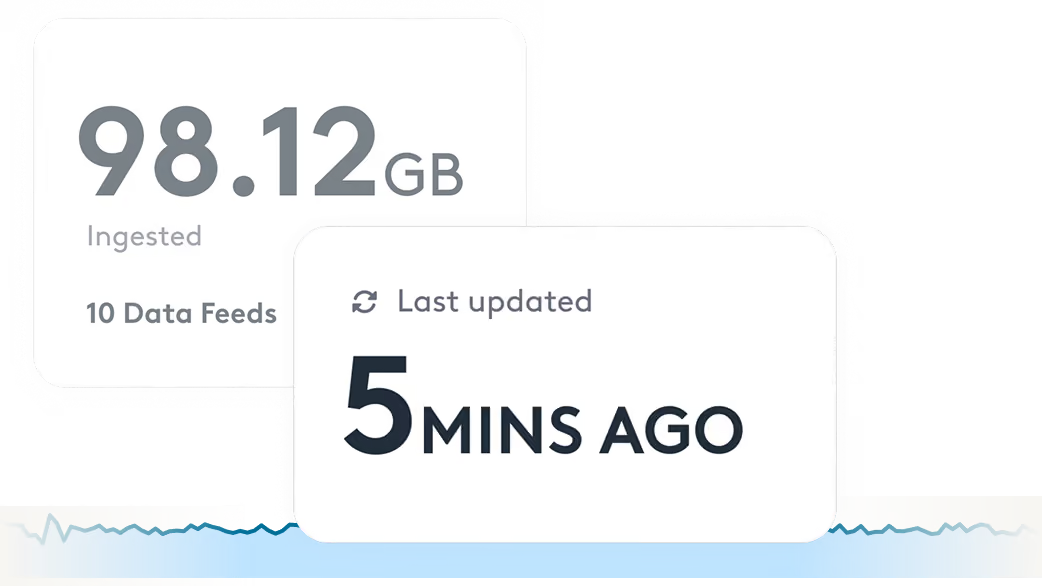
Action and Act
Findings feed into one platform, trigger remediation actions into ServiceNow, and power the exposure reporting needed to stay ahead as frontier AI models continue to raise the threat bar.
Continuous Controls Confidence
Continuous visibility into control performance, backed by normalized, policy-aware data at the source.
Actionable Vulnerability & Exposure Insights
Asset-correlated vulnerabilities for accurate prioritization and exposure management.
CMDB Accuracy
A continuously validated asset foundation that reflects your actual environment — identifying where you may have gaps in your CMDB today
Executive Reporting & Defensible Metrics
Leadership metrics that hold up under scrutiny — because the underlying data is accurate, traceable, and consistently normalized.
Threat Detection & Response Acceleration
Correlated, enriched telemetry that reduces noise and puts the right context in front of the right teams, faster.
Drive better business outcome against data that holds up.
See how the DataBee connects to your existing tools and see your environment within days, using real data from your scanners and asset sources.